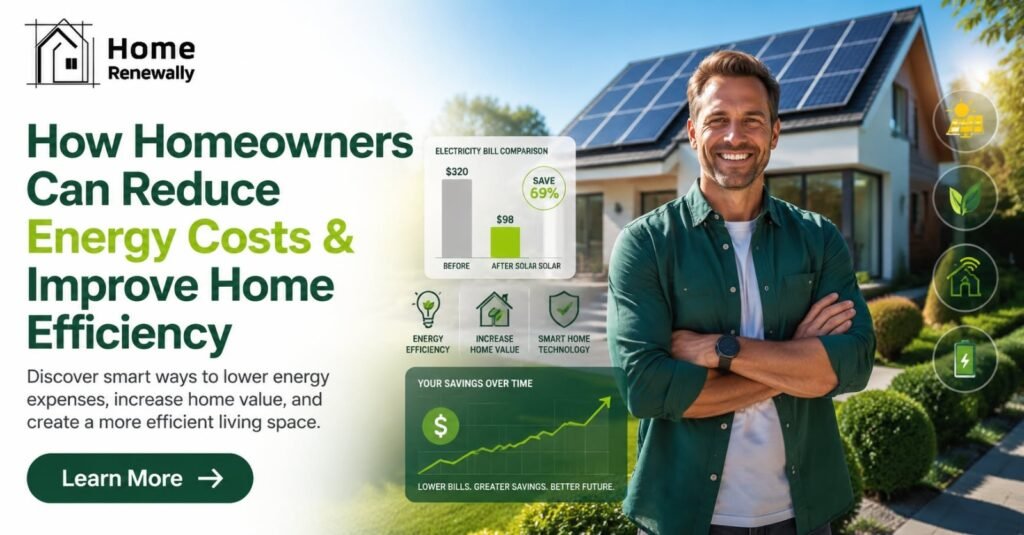
Rising utility bills affect nearly every household. The good news is that many of the most effective ways to reduce energy costs do not require a complete home renovation. Strategic improvements to how your home uses and retains energy can lower monthly bills, improve comfort, and reduce environmental impact.
This guide outlines practical, high-impact steps homeowners can take to improve energy efficiency, ranked roughly from lowest cost and effort to larger investments.
Start with No-Cost and Low-Cost Habits
Simple behavioral changes often deliver immediate savings with zero or minimal expense:
- Adjust your thermostat. Set it to around 68°F (20°C) when home in winter and 78°F (26°C) in summer. Lower or raise the temperature by 7–10 degrees when sleeping or away to save up to 10% on heating and cooling costs.
- Turn off lights, electronics, and chargers when not in use. Unplug devices that draw standby power (often called phantom loads), which can account for 5–10% of household electricity use.
- Use ceiling fans to circulate air so you can raise the thermostat slightly in summer or lower it in winter.
- Wash clothes in cold water and only run full loads of laundry and dishes.
- Open curtains or blinds on sunny days in winter to gain free heat, and close them in summer to block solar gain.
These habits cost nothing and begin saving money right away.
Seal Air Leaks and Improve Insulation
Air leaks and inadequate insulation are among the biggest sources of energy waste. Heating and cooling typically account for nearly half of a home’s energy use. Sealing the building envelope and adding insulation often delivers some of the highest returns.
Focus on these areas:
- Seal gaps around windows, doors, attic hatches, plumbing penetrations, electrical outlets, and recessed lights using caulk, weatherstripping, or foam sealant.
- Install door sweeps and draft stoppers under exterior doors.
- Add or upgrade attic insulation. Many older homes benefit significantly from bringing attic insulation up to recommended levels (often R-38 to R-60 depending on climate).
- Insulate accessible ducts in unconditioned spaces and seal duct joints.
According to ENERGY STAR estimates, proper air sealing combined with added insulation can reduce heating and cooling costs by an average of about 15%. These projects frequently pay for themselves within a few years.
A professional energy audit that includes a blower door test can identify the largest leaks and prioritize improvements.
Optimize Heating and Cooling Systems
Your HVAC system is usually the largest energy consumer in the home. Improving its performance yields strong results:
- Replace air filters regularly (every 1–3 months depending on use and filter type).
- Schedule annual professional maintenance for furnaces, air conditioners, or heat pumps.
- Install a programmable or smart thermostat. These devices can automatically adjust temperatures based on your schedule and often save 8–10% or more on heating and cooling bills.
- Keep vents and registers clear of furniture and debris.
- Consider upgrading an aging system to a high-efficiency model or heat pump when replacement is needed. Modern heat pumps can deliver substantial efficiency gains in many climates.
Addressing air sealing and insulation first allows a new system to be properly sized, which improves both comfort and efficiency.
Upgrade Lighting and Appliances
Lighting and appliances offer clear opportunities for savings:
- Replace remaining incandescent or halogen bulbs with LED lighting. LEDs use up to 75–90% less energy and last many times longer. A full-home conversion often pays for itself within the first year.
- When replacing appliances, choose ENERGY STAR-certified models. Refrigerators, washing machines, dishwashers, and other appliances that carry the label typically use significantly less energy and water than older units.
- Clean refrigerator coils periodically and keep the temperature between 35–38°F (1.7–3.3°C).
- Use power strips with switches to easily cut power to entertainment centers or computer setups when not in use.
Reduce Water Heating Costs
Water heating is often the second or third largest energy expense. Simple steps help:
- Set the water heater temperature to 120°F (49°C). Higher settings waste energy and increase scald risk.
- Insulate the hot water tank (if it is not already foam-insulated) and the first few feet of hot and cold pipes.
- Install low-flow showerheads and faucet aerators. These reduce hot water use without sacrificing performance.
- Consider a heat pump water heater when replacing an aging unit. These can use significantly less electricity than conventional electric models.
Windows, Doors, and Larger Improvements
Windows and doors influence both comfort and energy use:
- Add weatherstripping and caulk around existing windows and doors.
- Use insulating window film or cellular shades in the short term.
- When replacement is necessary, choose ENERGY STAR-rated windows appropriate for your climate. Proper installation is as important as the product itself.
Larger projects such as cool roofs, high-performance siding, or full HVAC replacements deliver benefits but generally have longer payback periods. Prioritize the highest-return measures first.
Monitor Usage and Plan Strategically
Track your energy use through utility bills or a home energy monitor. Identifying high-usage periods helps target the biggest opportunities. Many utilities also offer free or low-cost energy audits and rebates for efficiency upgrades.
When planning improvements, follow a logical sequence:
- Seal air leaks and improve insulation.
- Optimize controls (thermostats, schedules, lighting).
- Maintain and then upgrade major systems as needed.
- Consider renewable generation such as solar after efficiency measures are in place.
This order reduces the size (and cost) of later equipment while maximizing overall savings.
Final Thoughts
Reducing energy costs and improving home efficiency does not require doing everything at once. Start with free and low-cost actions, then move to sealing, insulation, and smarter controls. These steps typically deliver the fastest returns and make the home more comfortable year-round.
Over time, consistent attention to efficiency lowers monthly bills, reduces exposure to rising energy prices, and contributes to a more sustainable household. Many of the same improvements that cut energy use also increase home value and appeal to future buyers.
Review your current energy bills, identify the easiest opportunities in your home, and begin with the measures that fit your budget and climate. Small, consistent improvements compound into meaningful long-term savings and a more efficient, comfortable living space.