

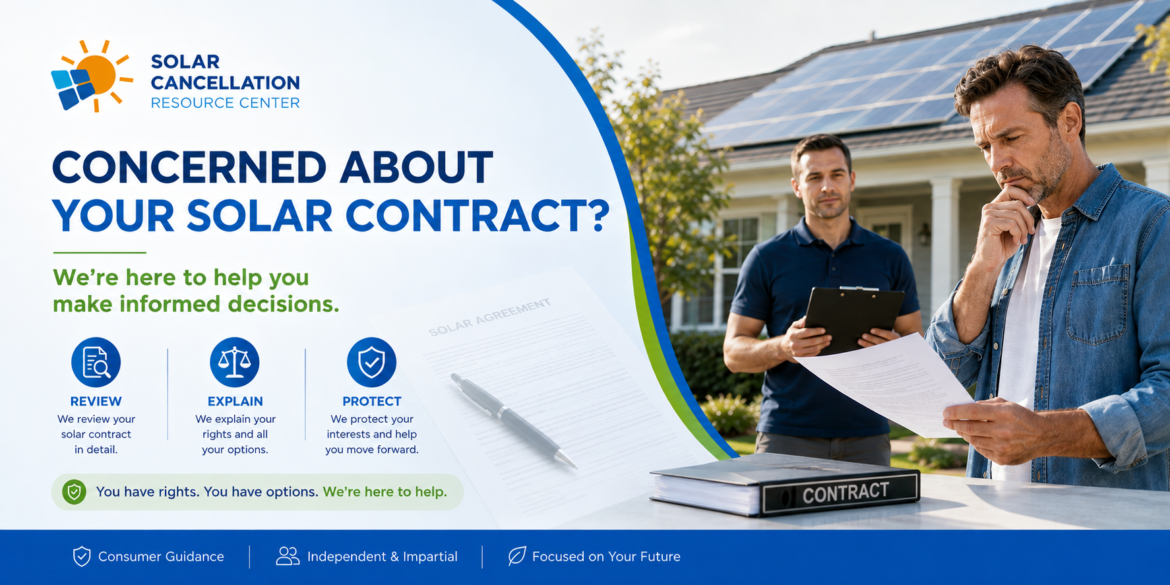
The rapid growth of residential solar energy has helped millions of homeowners reduce electricity costs and embrace renewable energy. However, not every solar installation experience goes as planned. Some homeowners later discover that the financing terms, sales promises, or contract conditions are significantly different from what they originally understood.
If you believe you’re locked into a solar agreement that no longer serves your interests, it’s important to know that you may still have options. Understanding your contract and your consumer rights is the first step toward making an informed decision.
Why Some Homeowners Regret Their Solar Agreements
Most people invest in solar panels expecting long-term savings and energy independence. Unfortunately, several issues can lead to dissatisfaction after signing an agreement.
Common concerns include:
- Monthly payments that are higher than expected
- Promised energy savings that never materialize
- Hidden fees or unexpected financing terms
- Misleading sales presentations
- Poor installation quality
- Delays in system activation
- Difficulty receiving customer support
- Contracts that are difficult to understand
While not every complaint indicates misconduct, these issues can create significant financial and emotional stress for homeowners.
Understanding the Type of Agreement You Signed
Not all solar contracts are the same. Your available options often depend on the type of agreement you entered.
Solar Loan
A solar loan allows you to finance the purchase of the system. Although you eventually own the equipment, you’re responsible for monthly loan payments, often over 15–25 years.
Solar Lease
With a lease, another company owns the solar panels while you pay a monthly fee to use them.
Power Purchase Agreement (PPA)
Instead of paying for the equipment, you purchase the electricity generated by the system at a predetermined rate.
Each agreement has different cancellation rules, transfer requirements, and legal obligations.
Signs You Should Review Your Contract Carefully
If you experience any of the following, it may be worth reviewing your agreement with a qualified professional:
- The salesperson made promises that aren’t reflected in the written contract.
- Important financial details were not fully explained.
- Your monthly payments are significantly higher than expected.
- You discovered additional fees after signing.
- The installation was incomplete or substantially delayed.
- The system isn’t producing the expected energy output.
- The company is unresponsive to service requests.
Carefully reviewing your documents can help determine whether there are discrepancies between what was promised and what was delivered.
Steps to Take Before Making Any Decision
1. Read Your Entire Contract
Locate your original agreement and review sections related to:
- Cancellation policies
- Warranties
- Financing terms
- Performance guarantees
- Arbitration clauses
- Default provisions
Understanding these sections helps you avoid unnecessary mistakes.
2. Gather Supporting Documentation
Organize documents such as:
- Sales proposals
- Emails
- Text messages
- Marketing materials
- Installation paperwork
- Loan documents
- Utility bills
- Photos of the installation
Having complete records can be valuable if questions arise later.
3. Document Every Communication
Keep a record of every phone call, email, and written conversation with your installer, lender, or service provider.
Include:
- Dates
- Names of representatives
- Discussion summaries
- Promised follow-up actions
Maintaining a timeline can help clarify the history of your case.
4. Seek Independent Guidance
Rather than relying solely on the company that sold the system, consider speaking with an independent professional who understands consumer protection issues related to residential solar agreements.
Independent guidance can help you better understand your rights and available options based on your specific situation.
Are Solar Contracts Ever Cancelled?
Every situation is unique. Whether a contract can be cancelled, renegotiated, or otherwise resolved depends on factors such as:
- State laws
- Contract language
- Sales practices
- Financing structure
- Installation status
- Available documentation
Because these factors vary widely, there is no universal outcome for every homeowner.
Consumer Protection Laws May Apply
Depending on the circumstances, various consumer protection laws may be relevant if deceptive or misleading business practices occurred during the sales process. The applicability of these laws depends on the facts of each individual case and should be evaluated by qualified professionals.
Mistakes to Avoid
If you’re unhappy with your solar agreement, avoid making rushed decisions such as:
- Ignoring lender communications
- Assuming verbal promises override written contracts
- Throwing away important paperwork
- Stopping payments without understanding the legal consequences
- Waiting too long to investigate your options
Taking a careful, informed approach is generally the best way to protect your interests.
When Should You Seek Professional Assistance?
You may benefit from professional guidance if:
- You believe important information was withheld before signing.
- Your contract contains terms you didn’t understand.
- You’re facing aggressive collection efforts.
- Your installer refuses to resolve legitimate concerns.
- You’re unsure whether consumer protection laws apply to your situation.
A knowledgeable professional can help review your documentation and explain potential paths forward based on your individual circumstances.
Final Thoughts
Going solar should be a positive investment, but not every homeowner has the experience they expected. If you believe your solar agreement was based on incomplete information, misleading representations, or unfavorable terms, taking time to understand your contract is an important first step.
Every situation is different, and the best course of action depends on the specific facts of your case. By gathering documentation, reviewing your agreement carefully, and seeking informed guidance when appropriate, homeowners can make more confident decisions about how to move forward.