
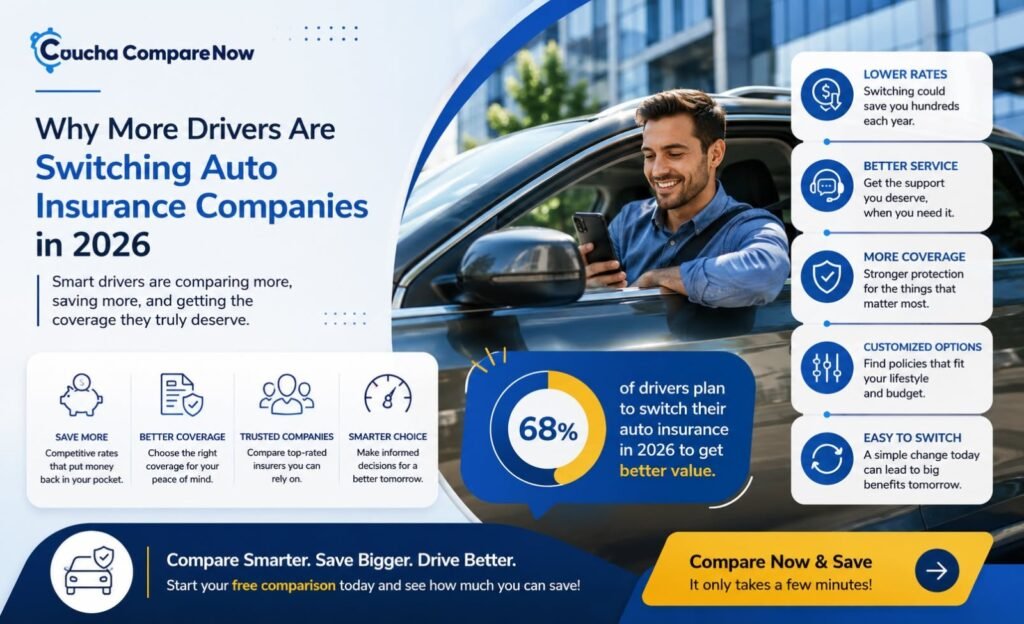
Auto insurance has become one of the most actively shopped personal finance products in recent years. In 2026, a growing number of drivers are not only comparing rates but actually changing carriers. The shift reflects a combination of higher premiums in recent years, greater price transparency, and the ease of switching through digital tools.
Understanding the main reasons behind this trend can help drivers decide whether staying with their current insurer still makes financial sense.
Rising Premiums Push Drivers to Shop
The most common reason drivers switch auto insurance is cost. After several years of notable rate increases driven by higher repair costs, parts inflation, severe weather losses, and increased claims frequency, many policyholders received renewal notices with higher premiums.
When a renewal rate rises without a clear personal reason—such as an accident or ticket—drivers often begin comparing options. Surveys consistently show that a majority of those who switch cite either a rate increase from their current insurer or a lower quote from a competing company as the primary motivation.
In 2026, even as some markets have seen premiums stabilize or modestly decline, the memory of previous increases and the ongoing pressure on household budgets continue to drive shopping activity.
Better Rates Are Often Available Elsewhere
Insurance companies price risk differently. Two carriers can look at the same driver, vehicle, location, and coverage needs and produce significantly different premiums. Factors such as how a company weighs credit-based insurance scores, driving history, vehicle type, and regional loss experience create meaningful price gaps.
Drivers who take the time to obtain multiple quotes frequently discover savings of several hundred dollars per year. In some cases the difference is larger. This reality has made loyalty less rewarding for many policyholders. Remaining with the same insurer for years no longer guarantees the best available rate.
Digital Tools Make Comparison Shopping Easier
Online quote platforms, mobile apps, and insurer websites have reduced the friction of shopping for auto insurance. Drivers can now gather multiple quotes in minutes rather than spending hours on the phone or visiting agents.
This convenience has increased both the frequency of shopping and the rate at which shoppers follow through with a switch. Digital comparison tools also make it simpler to match coverage levels accurately so that price differences reflect true savings rather than reduced protection.
Affordability Concerns Drive Action
For many households, auto insurance represents a significant recurring expense. When premiums rise, drivers look for ways to manage the cost. Common responses include raising deductibles, adjusting coverage limits, dropping optional coverages, or switching carriers entirely.
Younger drivers and those with tighter budgets are especially likely to shop aggressively or reduce coverage. At the same time, older drivers have also increased their shopping activity as cost sensitivity grows and digital access improves.
Dissatisfaction with Claims or Service Plays a Smaller Role
While poor claims experiences or customer service issues can prompt a switch, they rank well behind price as the primary reason for changing insurers. Most drivers who switch do so because they found a lower rate or received a noticeable increase from their current company. Service quality and company reputation matter, but cost remains the dominant factor in 2026.
What Drivers Should Consider Before Switching
Switching can produce real savings, but it should be done thoughtfully:
- Compare quotes with identical coverage limits, deductibles, and optional protections so the comparison is accurate.
- Review the claims process, financial strength, and customer satisfaction ratings of any new insurer.
- Check whether loyalty discounts, multi-policy discounts, or other benefits with the current carrier offset part of a rate difference.
- Confirm that the new policy meets state minimum requirements and any lender or lease obligations.
- Avoid focusing solely on the lowest premium if it requires reducing important coverage.
Shopping every one to two years, or whenever a renewal notice shows a significant increase, remains one of the most effective ways to keep auto insurance costs under control.
The Broader Market Context in 2026
The auto insurance market has become more competitive as carriers adjust pricing and compete for customers. Elevated shopping rates and higher switching activity reflect both consumer awareness and the availability of better deals for those willing to look. While rate pressure has eased in some areas compared with prior years, the habit of comparing options has become more established.
Drivers who remain passive risk paying more than necessary. Those who actively review their options are more likely to find coverage that fits both their needs and their budget.
Final Thoughts
More drivers are switching auto insurance companies in 2026 primarily because of cost. Rising or high premiums, the availability of lower rates elsewhere, and the ease of digital comparison have made changing carriers a practical step for many households.
Switching is not automatically the right move in every case, but regularly reviewing quotes has become a smart financial habit. By comparing coverage carefully and focusing on total value rather than price alone, drivers can protect both their vehicles and their budgets in a market that continues to reward informed shoppers.